|

The Rebel Post
by
Patricia A. Kaufmann
This article
first appeared in Scott's Monthly Stamp Journal, April
1976.
Feel free to print it out to read later. If you do nothing but
look at the stamp
and cover illustrations, you'll learn a lot about this colorful
collectible era.
Move your cursor over the pictures to see captions.
Collecting
the Confederate Era
THE
SOUTH SECEDES
Although
the first Confederate stamp was issued on October 16, 1861, the
era of Confederate collecting began almost a year before when,
on December 20, 1860, South Carolina became the first of 13 Southern
states to seceded from the Union.
Afraid
that newly-elected President Abraham Lincoln would abolish slavery
and drastically alter the way of life in the rural South, six
other states quickly followed South Carolina's lead. Then in February
of 1861, delegates from Alabama, Florida, Georgia, Louisiana,
Mississippi, South Carolina, and Texas assembled at Montgomery,
Alabama to form the Confederate States of America (C.S.A.). Jefferson
Davis of Mississippi and Alexander Stephens of Georgia were elected
president and vice-president.
In
the early morning hours of April 12, 1861 the first shot of the
Civil War was fired by a Confederate battery in Charleston, South
Carolina. After the Confederates captured the Union stronghold,
Lincoln called for 75,000 volunteers to serve for three months
to suppress the rebellion. It was an optimistic plea. Civil War
raged throughout the nation for a full four years.
Called
upon to raise arms against their Southern sisters, Virginia, Arkansas,
North Carolina, and Tennessee joined the Confederacy. Although
Kentucky and Missouri both remained in the Union, secessionist
groups set up rival governments that sent delegates to the Confederate
Congress. Technically, only 11 states joined the Confederacy,
but the Confederate flag, with a total of 13 stars, included the
last two.
REBELS
CREATE POST OFFICE 
The
Confederacy, no longer part of the Union, solved the problem of
moving the mail by creating its own postal service. The C.S.A.
Post Office Department was instituted on February 21, 1861. John
Henninger Reagan of Texas was appointed Postmaster General
two weeks later. On June 1, 1861, postal service between the warring
North and South was suspended.
Reagan
was a masterful executive. Under his supervision, the Department
actually made a profit. This was an incredible achievement, especially
in view of conditions in the wartime South. Even the Union officials
were impressed. In 1865, after the war had ended, Reagan was asked
to assume responsibilities in the post-war U.S. Post Office Department.
He declined.
The
C.S.A. Post Office had to provide its citizens with stamps. Less
than a month after his appointment, Reagan ran ads in both Southern
and Northern newspapers asking for sealed proposals from printing
firms desiring the account. The Department received bids from
companies in Philadelphia, New York, Baltimore and Newark as well
as New Orleans and Richmond.
After
war commenced at Fort Sumter, it was evident that the contract
should go to a Southern firm. The Department settled on the modest
Richmond lithographers, Hoyer & Ludwig.
The
first Confederate issue was placed in circulation in October -
five months after postal service between the North and South had
been suspended. In the meantime, postmasters throughout the seceded
states were directed to use temporary substitutes.
POSTMASTER
PROVISIONALS 
Until
adhesive stamps were provided by the Confederate government, some
postmasters reverted to the pre-stamp period practice of handstamping
the word "PAID" with the appropriate rate. This procedure
had been obsolete since 1847, when the first U.S. stamp was issued.
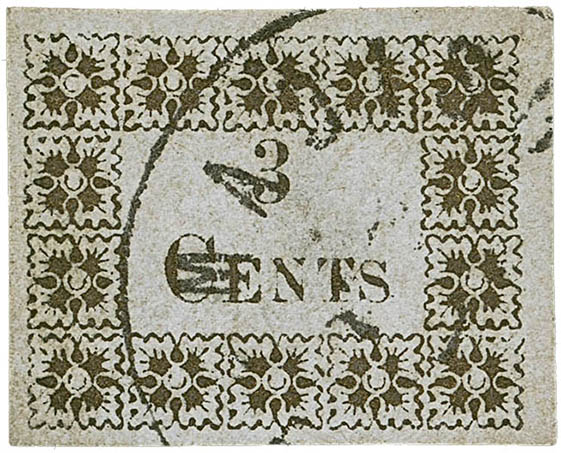
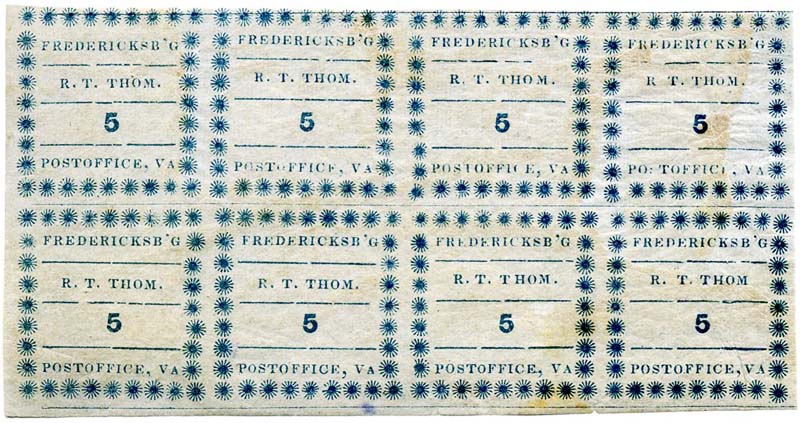
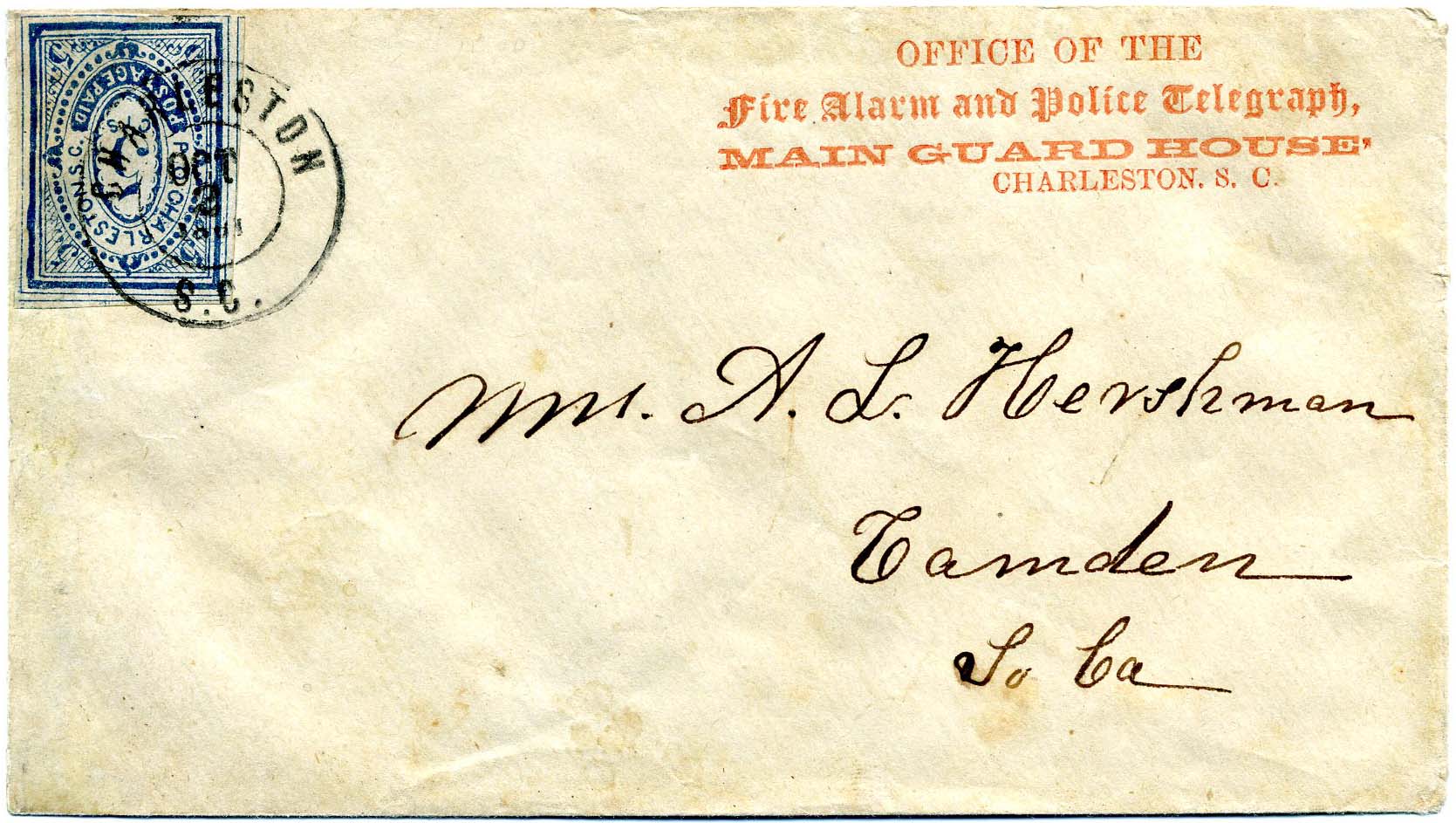
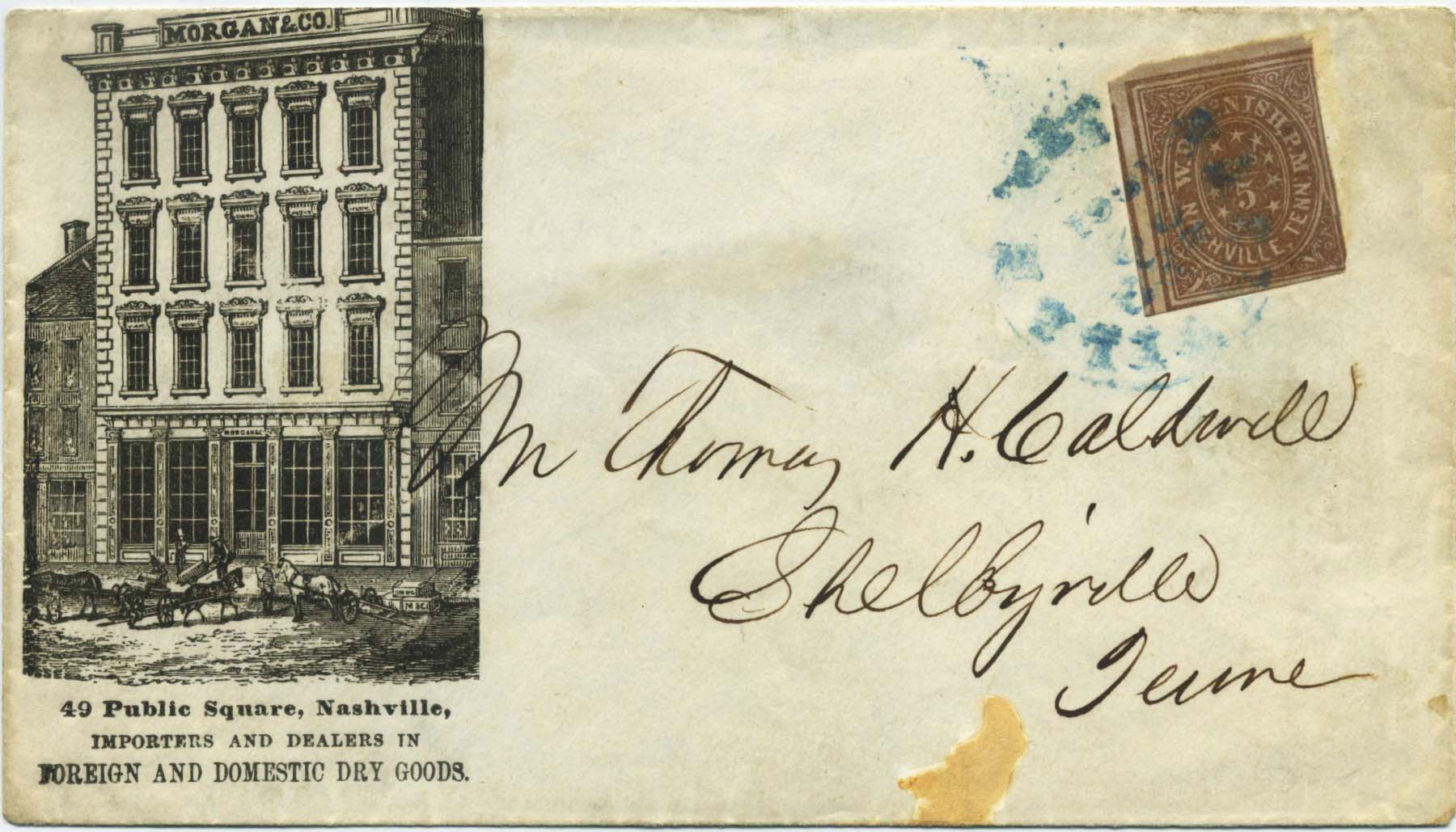
Other
postmasters decided to design their own personal adhesives for
their towns. Some of these included
the postmaster's name as well as the town of origin and the postage
rate. They were often printed at nearby newspaper or printing
offices.
These
stamps are known to collectors as "Postmaster Provisionals",
so called because they were used "provisionally",
until the first Confederate general issue appeared. In some circles,
Postmaster Provisionals are referred to as "locals",
since they were intended only for use from the town in which they
were issued.
EXPRESS
COMPANIES CARRY NORTH-SOUTH MAIL
When
postal service between the North and South ended, heavy business
was created for the express companies. These agencies carried
mail across the lines for nearly two months before the U.S. Post
Office Department ordered an end to such traffic, effective August
26, 1861. Thereafter, mail had to be sent by Flag-of-Truce, although
express companies continued to do some illegal business.
To
send a piece of correspondence by express carrier, a sealed and
addressed letter with 15c to 25c was enclosed in a second envelope.
This package was sent to the nearest express office for forwarding.
Part of this amount paid for the postage, and the balance was
the company's fee.
The
major express companies were Adams Express, American Letter Express,
Cushing Pony Express, Southern Express, and Pioneer Express.
HIGHER
RATES FOR THE CONFEDERACY
In
1861, the postage rate in the U.S. was 3c per piece. When mail
service between the North and the South ended, the Confederacy
instituted a higher rate, 5c per half ounce on letters traveling
a distance of under 500 miles. This 5c rate was doubled for distances
over 500 miles. After July 1, 1862, the postage rate was raised
to 10c for all distances.
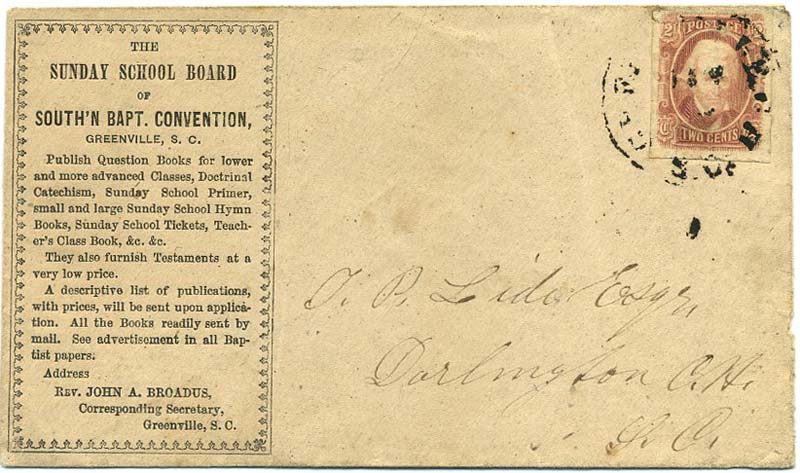
A
2c rate covered circulars and drop letters. Drop letters were
those which were posted, then placed in a post office or "charge
box" for pickup. Few people enjoyed the privilege of street
delivery, and citizens almost always fetched their mail from the
post office themselves.
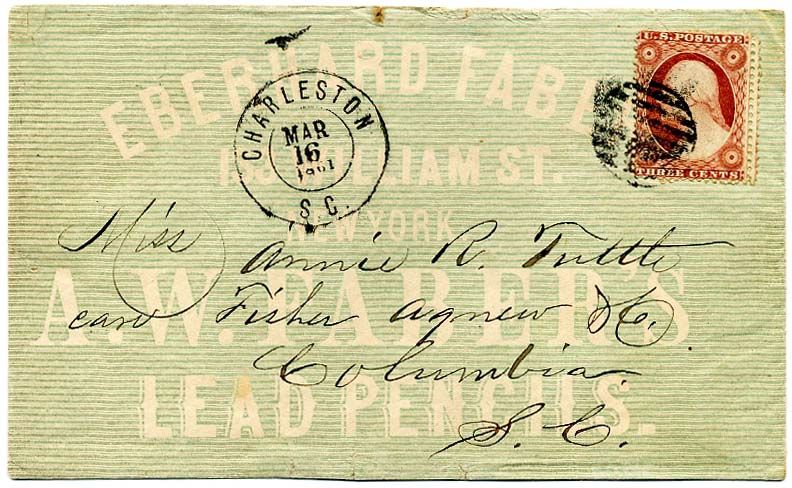
Indeed,
the vast majority of Confederate covers are addressed to a person
in a city with no street address noted. Frequently mail was addressed
"in care of" a third party. If street delivery was available
and so desired, an extra charge was added to the regular postage.
SOUTH
ISSUES 14 GENERAL ISSUES
Three
printing processes were employed in stamp production during the
19th century: lithography, typography, and engraving. Among stamp-issuing
governments, only the Confederate States of America, in the four
years of its short existence, employed all three.
LITHOGRAPHED
STAMPS 
Hoyer
& Ludwig, the Richmond lithographers, were neither experienced
in stamp printing nor equipped for the job. The scarcity of printing
stones forced the firm to recycle each stone after completion
of an order, resulting in a new transfer whenever an order for
stamps was received from the Confederate Post Office.
In
addition, inks were mixed in small quantities causing a wide inconsistency
of shades. As a result, the lithographed stamps of the Confederacy
present an intriguing challenge to philatelists.
The
first Confederate issue, a 5c green imperforate bearing the portrait
of President Jefferson Davis, appeared on October 16, 1861. Davis
was the first living President to appear on a postage stamp. In
the absence of radio, television, and lavishly illustrated publications,
the postage stamp was looked upon as the best means for introducing
the leader of the newly-formed Confederacy to his constituency.
The
Davis stamps and the next four of the 14 Confederate issues were
produced by lithography in 1861 and 1862. (Scott #'s 1-5)
TYPOGRAPHED
STAMPS
As
soon as a product of higher quality could be obtained, Hoyer &
Ludwig lost the commission. The well known firm of Thomas De La
Rue & Co. of London was contracted to supply the Confederacy
with plates and enough stamps to fill the need until a local house
could assume productions.
The
12 million 5c blue stamps produced by De La Rue & Co. picturing
Davis were designated "London prints". (Scott #6) Archer
& Daly of Richmond made inferior copies from the De La Rue
plates that are called "local prints". (Scott #7) A
1c Orange issue of John Calhoun (Scott #14) was produced but never
put to use.
ENGRAVED
STAMPS
During
the first two years of the war, necessity forced Postmaster General
Reagan to use lithographed and typographed stamps,rather
than the superior steel-plate printed stamps used by the Union.
The
firm of Archer & Daly was awarded the contract and produced
six engraved stamps in 1863 (Scott #'s 8-13). The first was a
2c brown-red stamp of Andrew Jackson. The next four were 10c blues
of Davis. The last was a 20c green of George Washington.
When
Richmond was threatened with capture in 1864, the printing of
Confederate currency and stamps was transferred inland to Columbia,
South Carolina. Then Sherman set the torch to Columbia on February
17, 1865. The devoted employees of the Keatinge & Ball firm
dumped the plates into the Congaree River.
CONFEDERATE
COVERS TELL WAR STORY
The
markings on envelopes mailed by Southern citizens during the Civil
War period reveal fascinating historical data. Prisoner-of-War
and Flag- of-Truce covers give clues to the destinies of individuals
involved in the war.
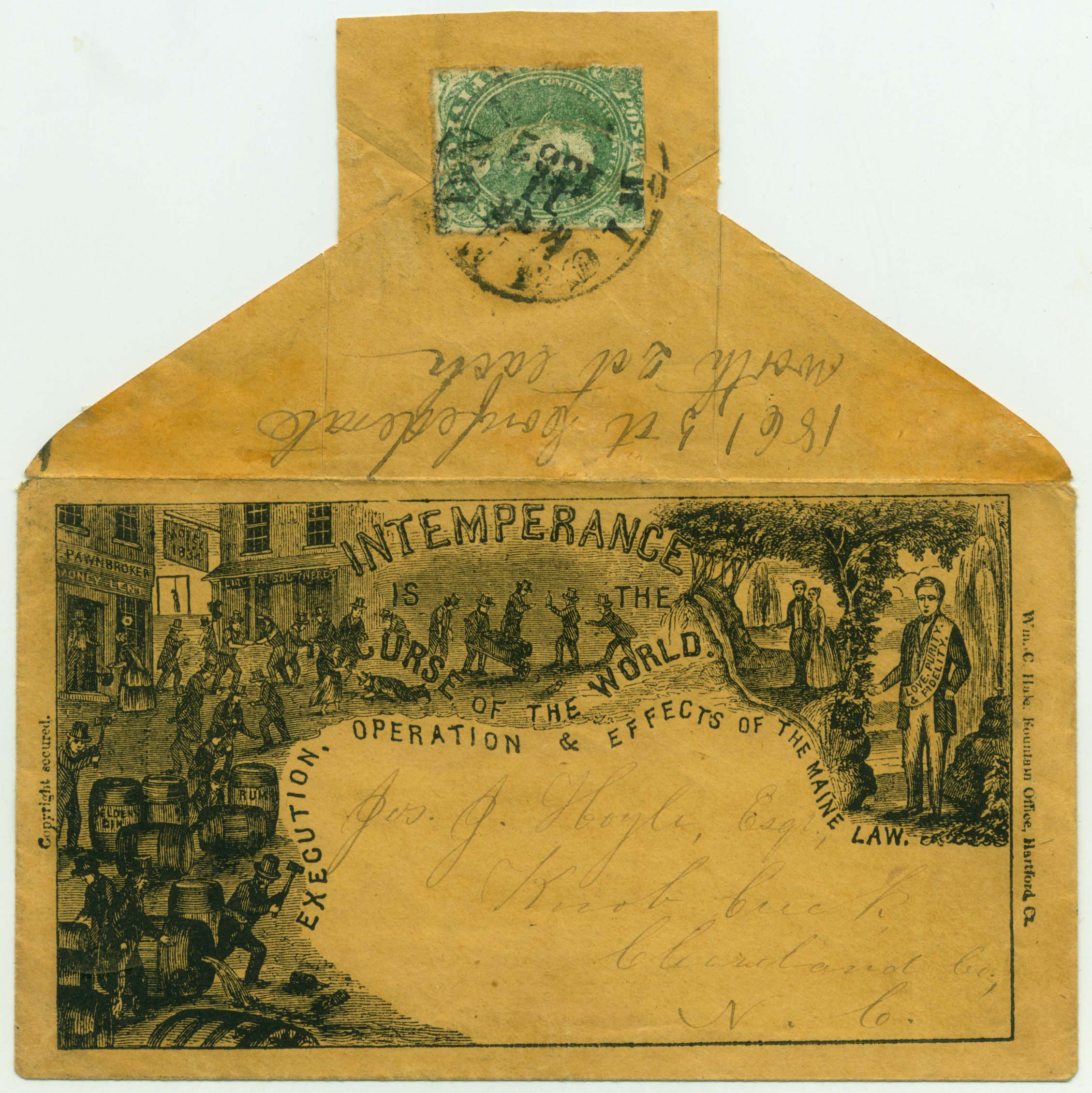
Patriotic
covers, illustrated with political themes, capture the sentiments
of the time. Blockade-run covers allow the collector to share
in the intrigue and danger in the South's strivings to maintain
contact with the outside world. Turned covers testify to the ingenuity
of the Southern citizens.
PRISONER-OF-WAR
COVERS
Prisoners'
and Flag-of-Truce through-the-lines covers have always formed
an important part of Confederate philately. The markings on covers
from captives of the Confederacy bear witness to the South's well
organized postal service. 
A
prisoner's cover was usually docketed with the prisoner's name,
rank, and company. The marking, "Examined", on the face
of the cover noted the letter's perusal by prison officials.
On
occasion, a single envelope bore the stamps and postal markings
of both sides, North and South. These covers are very rare and
eagerly sought after by collectors.
With
a bit of research, Confederate collectors can discover many fascinating
facts about the covers they own. By writing to the National Archives
in Washington, D.C. and supplying the name, rank, and company
of a soldier, his entire photocopied file can be obtained for
a small fee. In this manner, a collector can explore the history
behind his find.
Soldiers'
covers are of a similar human interest. Early in the war, a resolution
was passed allowing soldiers to send their letters "due",
since it was difficult to obtain stamps in the field. The recipient
paid the postage at the receiving end.
Soldiers were required to identify such covers with their name,
rank and company, which of course delights the collector-researcher
of today. Often these soldiers' covers had traveled to and from
historic military addresses in care of now famous generals.
PATRIOTIC
COVERS
The
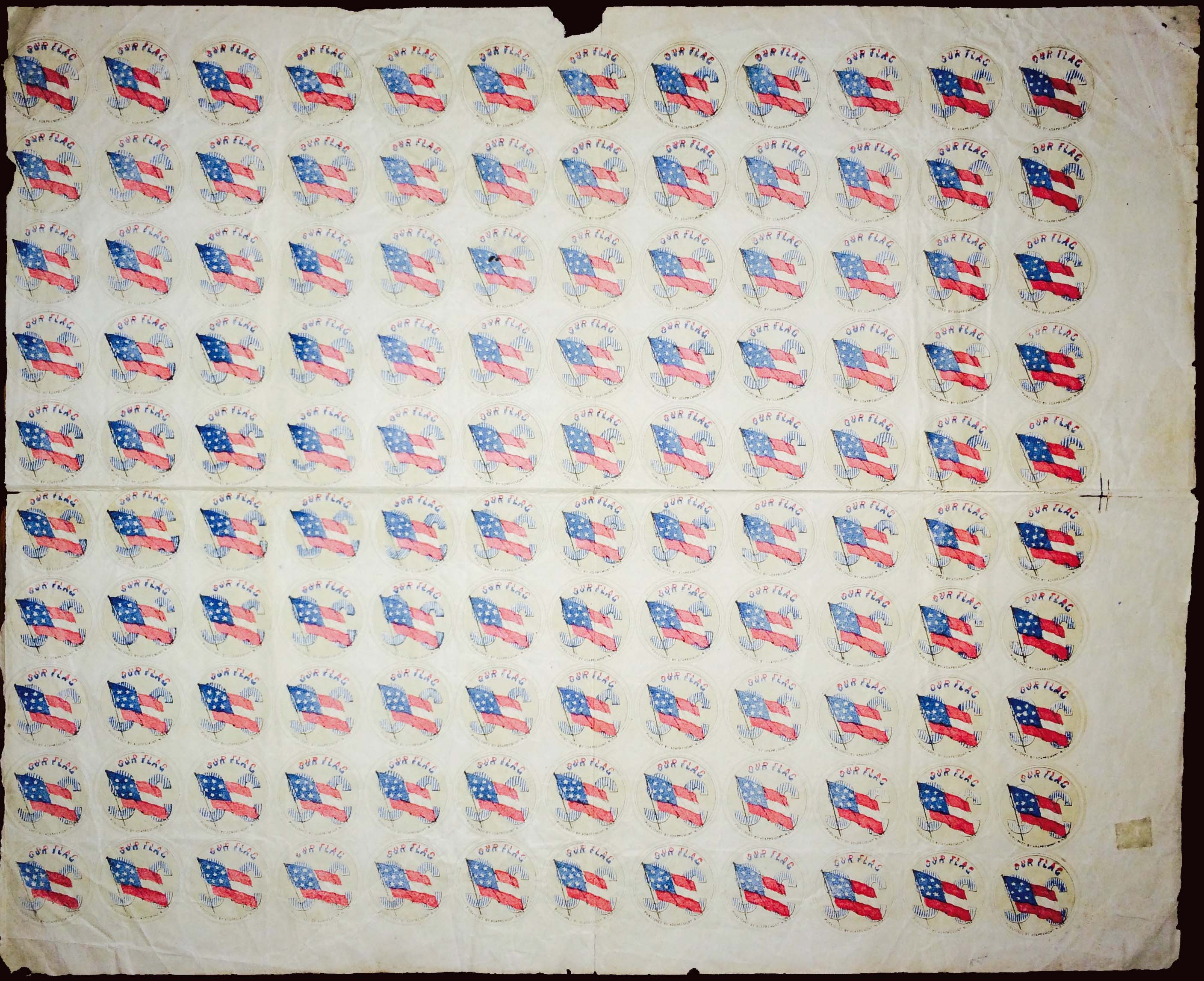
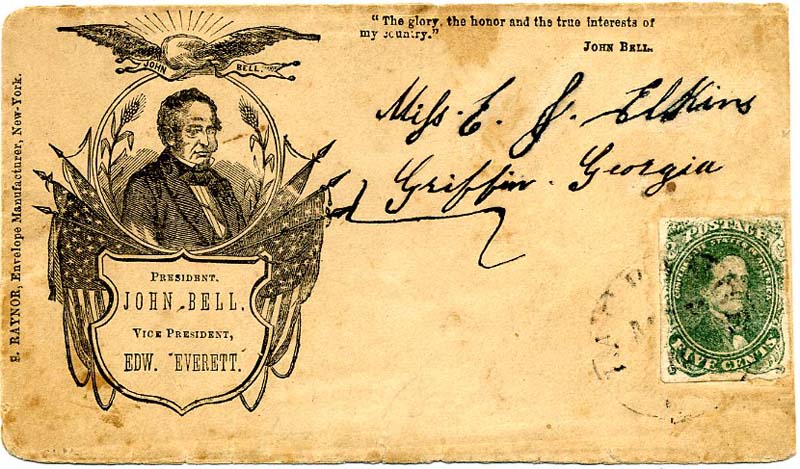
Civil War period was one of high emotion, emotion clearly displayed
on the colorful covers known as "Patriotics". Citizens
expressed their political ideology by using envelopes decorated
with flags, portraits, slogans, cartoons, and battle scenes.
The custom originated in the North where printers found that envelopes
boasting these designs were immensely popular. Soon a large part
of American correspondence was being moved in this picturesque
way. The South lacked the North's industrialized advantages and
was short of supplies, so Confederate patriotics are rare and
valued indeed.
The
most common design was that of a flag with 7 to 13 stars. Also
featured were pictures of cannons, soldiers, tents, cartoons and
caricatures. Many covers included slogans and verses as well:
"Hear
the Northern thunders mutter!
Northern Flags in the South will flutter;
Send them back your firm defiance!
Stamp upon the accurs'd alliance!"
- and -
"Stand
firmly by your cannon
Let ball and grape-shot fly
And trust in God and Davis
But keep your powder dry."

One of the rarest of all Confederate patriotics was the notorious
"Hanging Lincoln", which portrayed Abe Lincoln hanging
by his feet from the limb of a dead tree. Lincoln's hands were
tied, and an ax and a fence rail hung from his neck. An 11-star
Confederate flag flew above him while the Union Stars and Stripes
lay on the ground. One of the numerous verses that accompanied
the caricature:
Abe
Lincoln, the destroyer.
He once split rails,
now he has split the Union.
BLOCKADE-RUN
COVERS
In
April of 1861, the U.S. Navy formed a blockade of Southern ports
which lasted the duration of the war. This blockade effectively
strangled the Confederacy, and was largely responsible for the
Union's victory over the seceded states.
Blockade
running became an enormous naval industry. The principal transfer
points were Nassau and Bermuda in the West Indies.
The
captain's fee was a minimal 2c - a pittance considering the risk
involved. His profit, of course, was derived not from the mails,
but from the high priced goods he smuggled in from abroad.
When
Union forces gained control of the Mississippi River, the western
Confederacy was separated from its sisters in the east. The conveyance
of mail between the divided territories became an extremely dangerous
proposition.
Trans-Mississippi
blockade-run covers are often water stained because of the perilous
journey they endured. Most often, they were carried across the
river in half sunken boats in the dead of night. The 40c rate
such delivery commanded emphasizes the hazards involved for the
mail carrier.
ADVERSITY
COVERS 
Southerners,
isolated from world markets by Union Navy blockades, experienced
shortages of almost every kind of commodity. Paper became almost
unobtainable toward the close of the war. As a result, every available
scrap with sufficient writing space was pressed into service creating
a collecting category called "adversity covers".
Turned
covers were one of the first signs of the growing paper shortage.
Envelopes from previous correspondence were carefully turned inside
out, regummed, and used again. Sometimes a single envelope was
reused three or four times before the sheer weakness of its folds
forced its retirement. The previous stamp was either removed or
covered with a new one.
As
paper grew more and more scarce, people began to use old stocks
of wallpaper to fashion the unusual wallpaper envelopes so popular
with collectors today. It is a Confederate collector's second
nature to look on the inside of a cover for more exciting details
than those found on the outside.
Not
only wallpaper, but absolutely any sheet of paper with sufficient
blank space for an address was used. Books were stripped of their
flyleaves and title pages to supply letter paper and material
for homemade envelopes. Tax receipts, wrapping paper, election
ballots, bank checks, insurance blanks, military requisitions,
religious tracts, accounting forms and music sheets were just
some of the alternative sources.
Toward
the end of the war, the adhesive quality of gum on stamps deteriorated.
Some ingenious souls solved this problem by using needle and thread
to fasten the stamps to covers. This practice was extremely rare,
and a genuine example would fetch an incredible price at auction
today.
CONFEDERACY
DISSOLVES
Civil
War ended on April 9, 1865, when the Army of Northern Virginia
surrendered and the Confederate States of America was dissolved.
The South was forced to yield to the superior might of the industrialized
North.
For
Confederate philatelists, the story of this historic conflict
lives in their valued collections. The many colorful categories
of Confederate collecting, from the printing of general issues
to the travels of covers, provide a constant source of fun and
adventure.
|